


NEXT-GENERATION ANTIMICROBIAL LAVAGE FOR WOUND CLEANSING & IRRIGATION
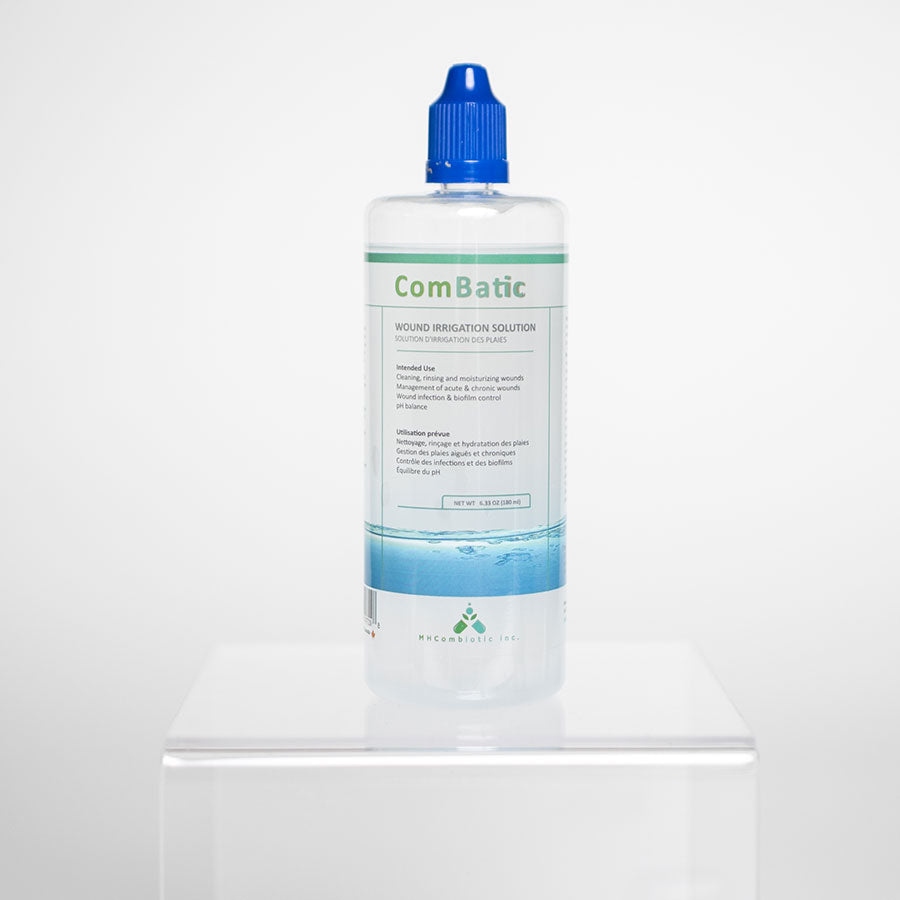
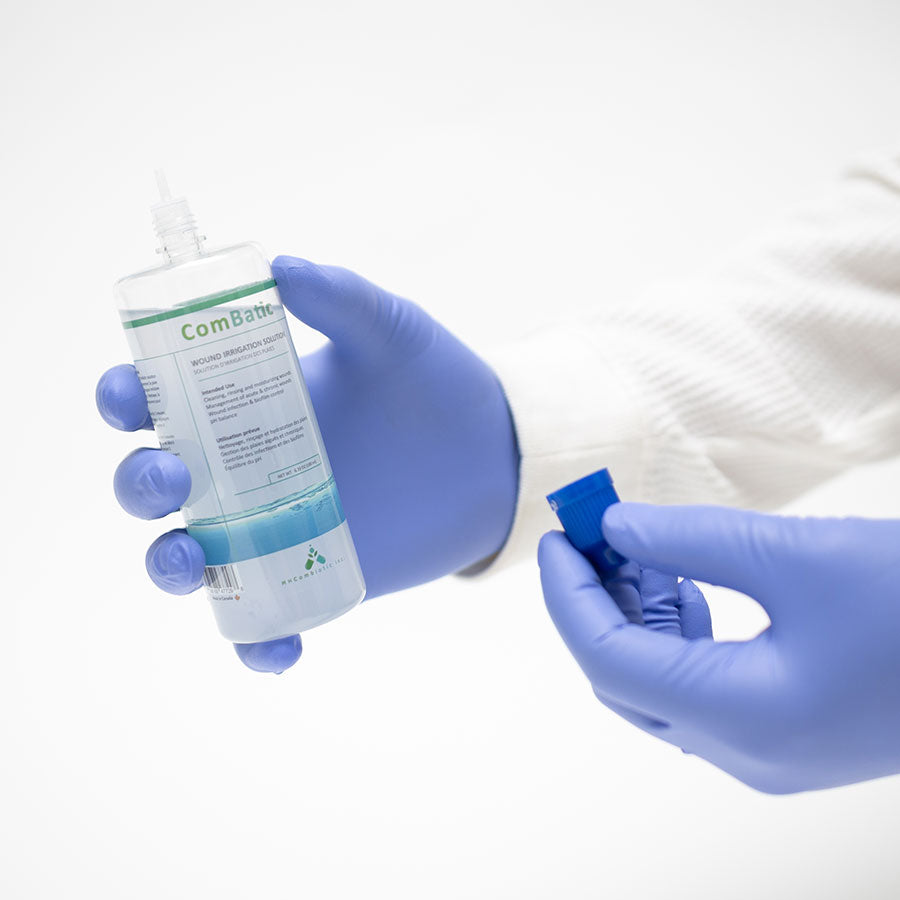
ComBatic™ Antimicrobial Wound Lavage
Next-generation antimicrobial wound cleansing and irrigation solution developed through over 5 years of comprehensive research and more than 18,000 formulation and screening experiments. It is designed to rapidly prepare the wound bed for optimal healing and subsequent treatment with advanced wound dressings and hydrogels, while remaining safe for repeated and long-term use.
Several scientific studies show superior safety & efficcacy effect in comparison with excisting communly use products.
What makes us different:
Naturally driven
Antiseptic-free
Preservative-free
Non-antibiotic
Non-acid-based
EDTA free
Designed to:
Rapidly reduce microbial burden and disrupt biofilm physically
Cleanse contaminated & infected wounds
Prepare wound bed prior to hydrogel application and dressing
Support faster wound healing and infection control
Be safe for repeated and long-term irrigation
Deliver significantly higher safety & efficacy than standard antiseptic solutions
What makes us different:
Rapidly reduce microbial burden and disrupt biofilm physically
Cleanse contaminated & infected wounds
Prepare wound bed prior to hydrogel application and dressing
Support faster wound healing and infection control
Be safe for repeated and long-term irrigation
Deliver significantly higher safety & efficacy than standard antiseptic solutions
What makes us different
superior safety & efficacy in comparison with excisting communly use products, supported by scientific studies
How To Use

Step 1
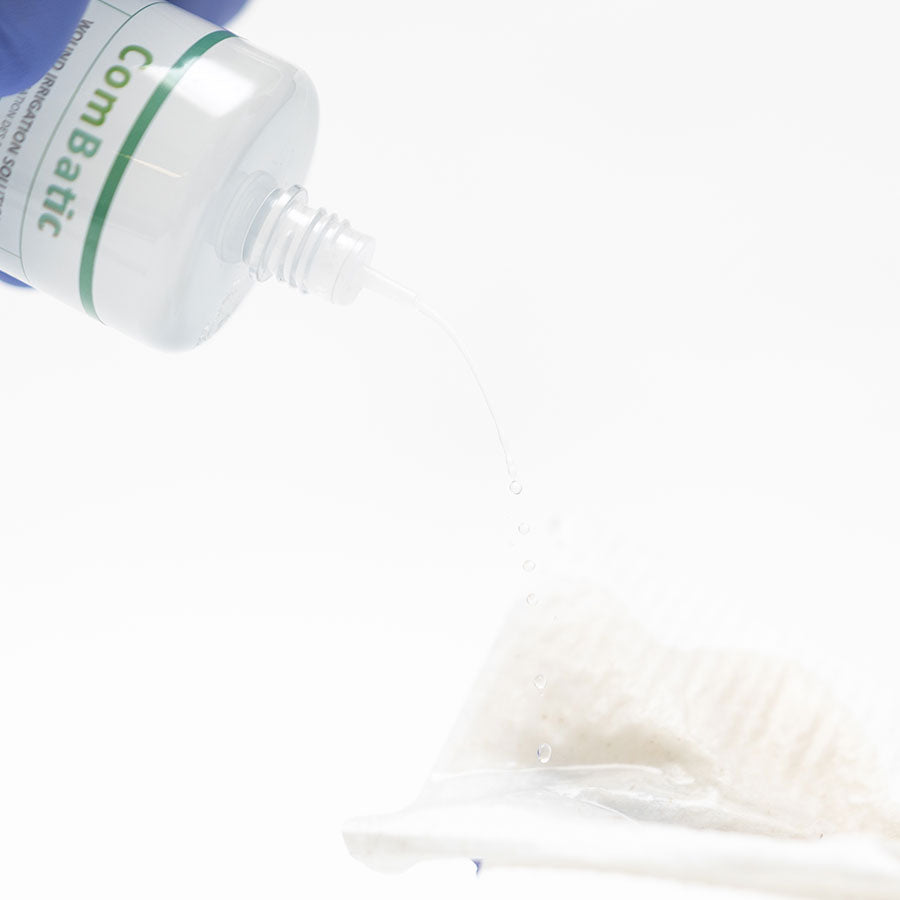
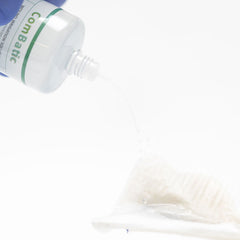
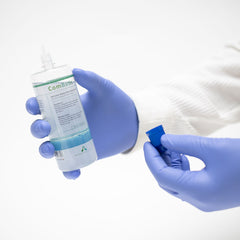
Soak gauze or wound pad with ComBatic™ Antimicrobial Wound Lavage

Step 2
Apply Combatic Lavage for 2-5 mins and Repeat daily or as directed by your healthcare professional.
Research Findings (Key Benefits)
Effective against 17 WHO priority pathogens, including Gram-positive and Gram-negative bacteria, and fungi (yeasts and molds).
Demonstrated superior antimicrobial performance compared to commonly used antibiotics and silver against clinical isolates.
ComBatic™-coated dressings demonstrated effective inhibition of both single clinical isolates and mixed microbial populations (Gram-positive, Gram-negative bacteria, and fungi), while most commercially available coated dressings showed limited or no activity, especially against mixed populations.
Demonstrated efficacy against both clinical and lab isolates in single-species and mixed microbial populations.
Demonstrated in multiple in-house and GMP-level 3rd party lab studies.
In 3rd party GLP-level and in-house mouse and pig wound models, MRSA-infected and non-infected wounds showed over 60% faster healing compared to standard of care.
No resistance was observed during testing, whereas resistance to silver and ciprofloxacin emerged on Days 1 and 3, respectively.
No cytotoxicity was observed in L-929 cells following 24-hour exposure (ISO 10993-5), with results confirmed by GMP-level third-party MEM elution testing in accordance with ISO 10993-12.
Validated in third-party GLP-level biocompatibility and toxicity studies, demonstrating safety for repeated use.
Maintains moist wound environment, easy to apply, compatible with standard dressings.
Formulated with a carefully adjusted pH to provide an optimal wound environment and support the natural wound healing process.
In a GMP-level third-party mouse systemic injection study conducted in accordance with ISO 10993-11, no mortality or evidence of systemic toxicity was observed.
In a GMP-level third-party guinea pig maximization sensitization study conducted in accordance with ISO 10993-10, no evidence of delayed contact hypersensitivity was observed, and the test article was not considered a sensitizer
LAL-test (USP <85>) in a GMP-level third-party study successfully passed the test.
A GMP-level third-party material-mediated rabbit pyrogen test conducted in accordance with USP <151> demonstrated non-pyrogenicity and met ISO 10993-11 acceptance criteria.
No irritation was observed in a GMP-level third-party intracutaneous injection study in New Zealand White rabbits conducted in accordance with ISO 10993-23.
GMP-level third-party stability studies passed Antimicrobial Effectiveness Test USP <51>, Total Yeasts and Molds Count (TYMC) USP <61>, Total Aerobic Microbial Count (TAMC) USP <61>, Potential of Hydrogel (pH) USP <791>, Visual Uniformity USP <3>, Viscosity USP <912>, Appearance USP <3>, and pathogen suitability testing for E. coli, Salmonella, P. aeruginosa, and S. aureus.
FAQ
Frequently Asked Questions
Use and Application
The lavage is designed for use during wound cleansing, dressing changes, and wound bed preparation.
No. ComBaticTM Lavage does not need to be rinsed off with another solution after use. It is designed to be used directly during wound cleansing and wound bed preparation.
After application, clinicians or caregivers should follow the wound-care protocol recommended by the healthcare provider, including appropriate dressing selection and frequency of dressing changes.
The frequency depends on the wound type, wound condition, level of exudate, presence of biofilm or infection signs, and the dressing-change schedule.
In many cases, ComBaticTM Lavage can be used during dressing changes. This could range from twice daily to once daily, or less frequently, such as every other day, depending on the wound-care plan and clinical judgment.
This depends on the wound condition and treatment goal.
For wounds without visible signs of infection or biofilm, ComBaticTM Lavage may be used as a cleansing solution to irrigate or gently clean the wound surface.
For wounds with suspected mild biofilm or localized microbial burden, ComBaticTM Lavage may be applied to gauze and left in contact with the wound for approximately two minutes before continuing with standard wound care.
For wounds with heavier biofilm, slough, or higher microbial burden, ComBaticTM Lavage may be applied using soaked sterile gauze and left in contact for up to five minutes. The process may be repeated as needed during wound bed preparation and debridement.
Yes. ComBaticTM Lavage can be used as part of wound bed preparation and may support physical debridement. It can help soften and disrupt debris, biofilm-associated material and cleanse microbial contamination from the wound surface.
When debridement is required, it should be performed by a trained healthcare professional using appropriate clinical judgment and protocols.
Three years from the manufacturing date.
About ComBaticTM Antimicrobial Wound Lavage
ComBaticTM Antimicrobial Wound Lavage is a topical wound cleansing solution designed to help clean wounds, reduce microbial burden, and support a healthier wound environment.
It is powered by MHCombiotic's CombioticTM platform, which combines purified plant-derived small molecules with selected inorganic components to create a synergistic antimicrobial and antibiofilm effect.
Many traditional wound cleansers are based on antiseptic chemistries such as PHMB, iodine, silver, acid-based (HOCl, Acetic Acid, NaOCl, etc) or other broad-spectrum antimicrobial agents. These products can reduce microbial growth, but some may also affect healthy human cells, especially with repeated use or prolonged exposure.
ComBaticTM Lavage was designed differently. It combines antimicrobial and wound-environment-supportive properties in one formulation. The goal is not only to reduce microbial burden, but also to support the wound-healing process by maintaining better compatibility with healthy tissue. It is also designed to avoid leaving behind unnecessary residues that may interfere with wound closure.
No. ComBaticTM Lavage is not a conventional antibiotic. It is a non-antibiotic antimicrobial wound cleansing solution based on MHCombiotic's proprietary CombioticTM technology.
This is important because overuse of topical and systemic antibiotics can contribute to antimicrobial resistance. ComBaticTM Lavage is designed to help manage microbial burden and biofilm without relying on traditional antibiotic mechanisms.
ComBaticTM Lavage works through a multi-action mechanism. The formulation helps cleanse the wound surface and expose microorganisms that may be protected within the matrix and debris.
For more information about the core mechanism, visitors can refer to the CombioticTM Technology section.
Biofilm and Debridement
A significant number of chronic wounds are contaminated with biofilm. Biofilm is one of the major reasons chronic wounds are difficult to heal.
Microorganisms inside biofilms are protected by a dense matrix, making them harder to remove and more tolerant to antimicrobial treatments.
Biofilm can maintain chronic inflammation, delay wound closure, and increase the risk of recurring infection.
A wound cleanser with antibiofilm activity can help improve wound bed preparation and support the healing process.
Wound debridement is the removal of dead tissue, slough, debris, and biofilm from the wound bed.
It is an important step in wound care because these materials can delay healing and create an environment where microorganisms can persist.
However, debridement can also temporarily expose deeper wound tissue and may increase local inflammation.
For this reason, infection control and wound-bed preparation are important before and during the debridement process.
ComBaticTM Lavage helps prepare the wound bed by cleansing the wound surface, reducing microbial burden, disrupting wound debris and complex EPS matrices, and supporting local inflammation control.
The formulation includes a safe biosurfactant-based component that helps break down protective wound debris and the extracellular polymeric substance (EPS). This can make debridement more effective by helping loosen and remove harmful films, wound debris, and micro-colonies that may not be visible to the naked eye.
In addition, the plant-based components in ComBaticTM Lavage are designed to support a more balanced wound environment and help control local inflammation, which can commonly occur during and after debridement. This combined wound-environment-supportive, antimicrobial, and antibiofilm approach helps promote cleaner, safer, and more effective wound bed preparation.
Safety and Evidence
ComBaticTM Lavage was developed with tissue compatibility as a key design priority.
Unlike some broad antiseptics that may affect both microbial and mammalian cells, ComBaticTM Lavage is designed to reduce microbial burden while supporting compatibility with healthy tissue.
Safety and biocompatibility studies have been conducted to evaluate its suitability for topical wound-care use.
Yes. ComBaticTM Lavage is designed for repeated use as part of routine wound care and dressing changes. The formulation has been developed to support wound cleansing while maintaining compatibility with healthy tissue. Use should follow the product instructions and the guidance of a healthcare professional.
ComBaticTM Lavage is supported by extensive in-house testing and third-party laboratory studies. These include antimicrobial testing, antibiofilm studies, biocompatibility assessments, safety evaluations, and formulation performance studies.
The product is based on MHCombiotic's broader CombioticTM technology platform, which has been developed through extensive formulation screening, mechanistic studies, and preclinical evaluation.
No. ComBaticTM Lavage can be used for wound cleansing and wound bed preparation where microbial burden, biofilm risk, or infection prevention is a concern.
It may be used in wounds with visible contamination, suspected biofilm, or increased microbial risk, as well as during routine dressing changes when antimicrobial cleansing is appropriate.
ComBaticTM Lavage may be used in home-care settings. Patients should follow the instructions, product label, or health care professional.
For deep, severe, rapidly worsening, or highly painful wounds, patients should seek medical assessment before self-treating.
No, the solution is stable.
- Choosing a selection results in a full page refresh.