


Next-Generation Hydrogel for Hard-to-Heal Wounds
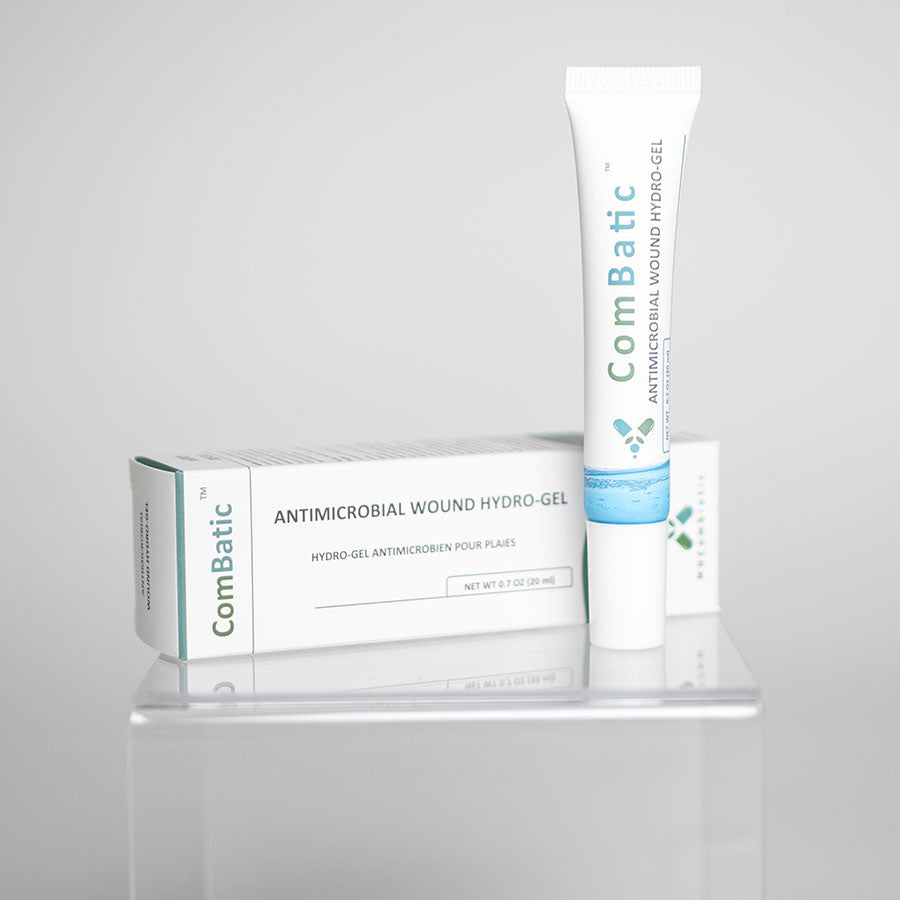
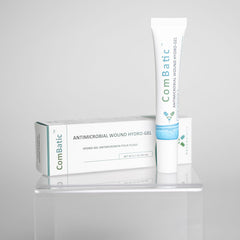
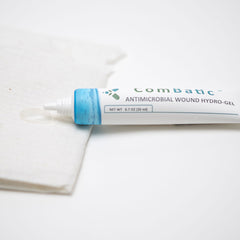
ComBatic™ Antimicrobial Wound Hydro-Gel
Next-generation, non-antibiotic wound gel developed through over 3 years of comprehensive research and more than 18,000 formulation and screening experiments. It is designed to rapidly control infection, disrupt biofilms, and support accelerated wound healing while remaining safe for repeated and long-term use.
Designed to:
Reduce infection burden in complex wounds
Support faster wound healing
Disrupt and eradicate microbial biofilms
Be safe for repeated and long-term use
Deliver significantly higher safety & efficacy than standard gels
What makes us different:
Reduce infection burden in complex wounds
Support faster wound healing
Disrupt and eradicate microbial biofilms
Be safe for repeated and long-term use
Deliver significantly higher safety & efficacy than standard gels
What makes us different
superior safety & efficacy in comparison with excisting communly use products, supported by scientific studies
How To Use

Step 1
Clean the wound with ComBatic™ Irrigation Solution.

Step 2
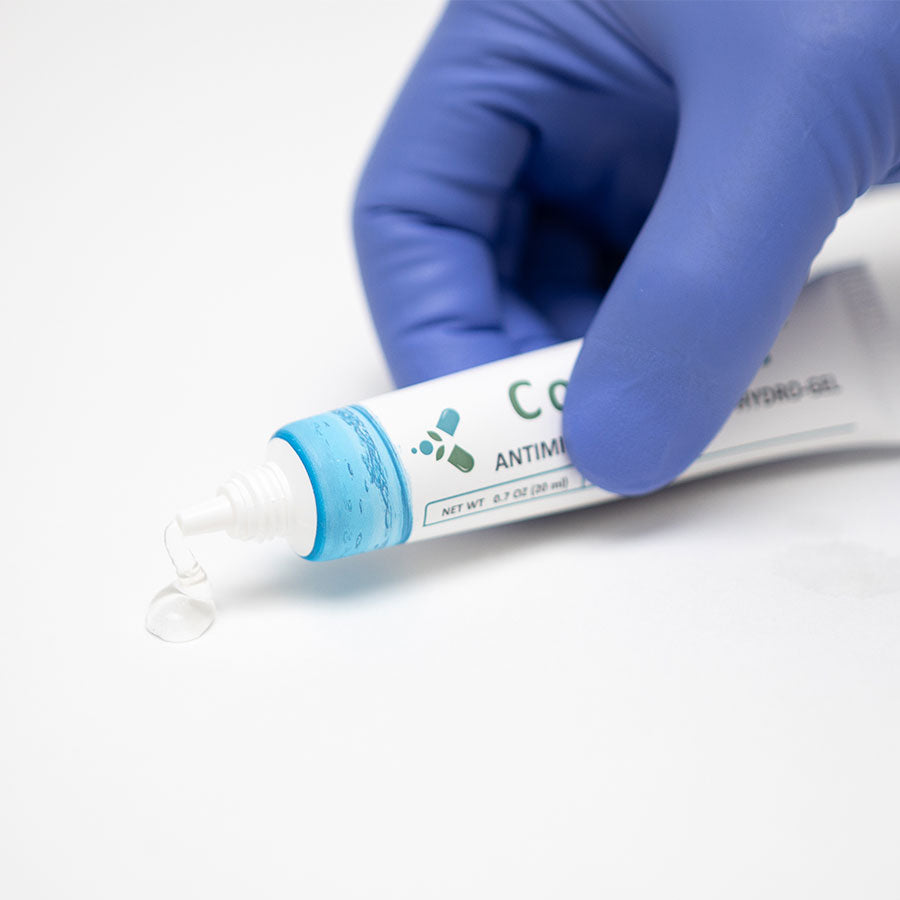
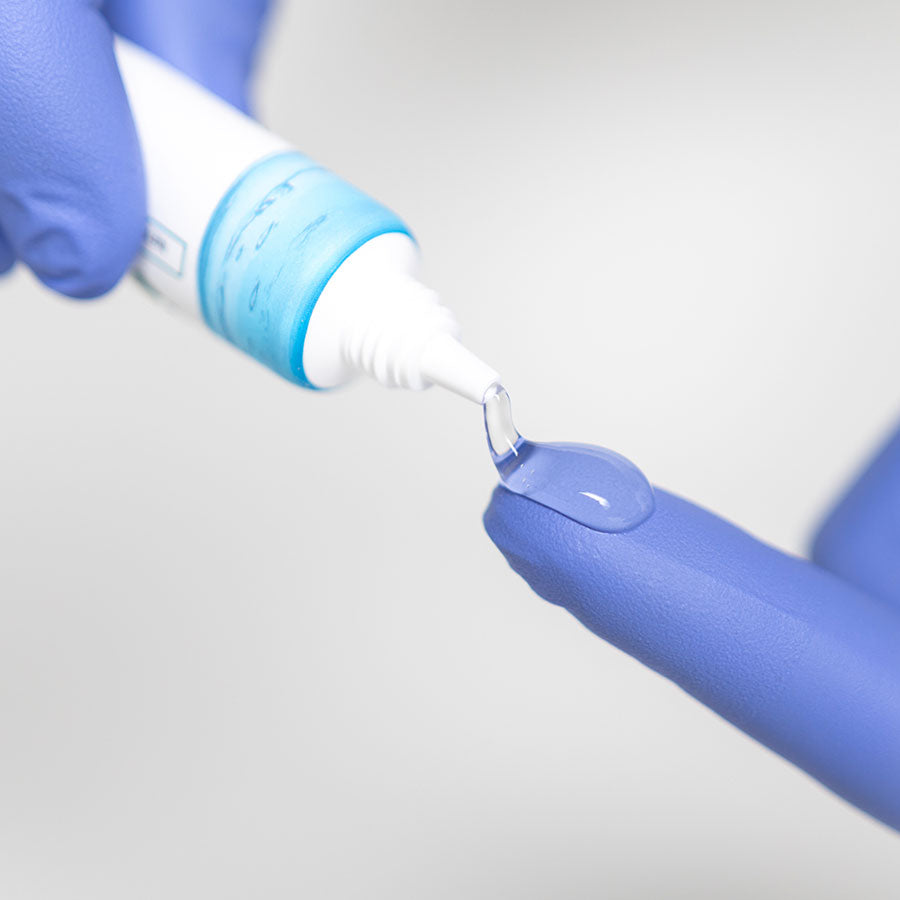
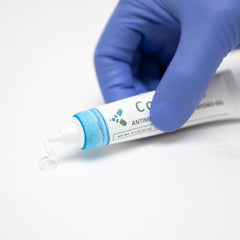
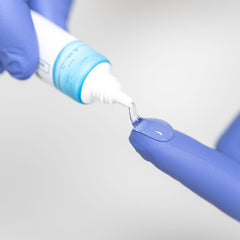
Apply a thin layer of ComBatic™ Hydro-Gel directly to the wound bed.

Step 3
Cover with a suitable secondary dressing as needed.

Step 4
Repeat daily or as directed by your healthcare professional.
Research Findings (Key Benefits)
Effective against 17 WHO priority pathogens, including Gram-positive and Gram-negative bacteria, and fungi (yeasts and molds).
Demonstrated superior antimicrobial performance compared to commonly used antibiotics and silver against clinical isolates.
ComBatic™-coated dressings demonstrated effective inhibition of both single clinical isolates and mixed microbial populations (Gram-positive, Gram-negative bacteria, and fungi), while most commercially available coated dressings showed limited or no activity, especially against mixed populations.
Demonstrated efficacy against both clinical and lab isolates in single-species and mixed microbial populations.
Demonstrated in multiple in-house and GMP-level 3rd party laboratory studies.
In 3rd party GLP-level and in-house mouse and pig wound models, MRSA-infected and non-infected wounds showed over 60% faster healing compared to standard of care.
No resistance was observed during testing, whereas resistance to silver and ciprofloxacin emerged on Days 1 and 3, respectively.
No cytotoxicity was observed in L-929 cells following 24-hour exposure (ISO 10993-5), with results confirmed by GMP-level third-party MEM elution testing in accordance with ISO 10993-12.
Validated in third-party GLP-level biocompatibility and toxicity studies, demonstrating safety for repeated use.
Formulated with natural, water-based polymers to enable safe bioabsorption, validated in a GLP-level porcine (Pig) wound model.
Maintains moist wound environment, easy to apply, compatible with standard dressings.
Formulated with a carefully adjusted pH to provide an optimal wound environment and support the natural wound healing process.
In a GMP-level third-party mouse systemic injection study conducted in accordance with ISO 10993-11, no mortality or evidence of systemic toxicity was observed.
In a GMP-level third-party guinea pig maximization sensitization study conducted in accordance with ISO 10993-10, no evidence of delayed contact hypersensitivity was observed, and the test article was not considered a sensitizer
LAL-test (USP <85>) in a GMP-level third-party study successfully passed the test.
A GMP-level third-party material-mediated rabbit pyrogen test conducted in accordance with USP <151> demonstrated non-pyrogenicity and met ISO 10993-11 acceptance criteria.
No irritation was observed in a GMP-level third-party intracutaneous injection study in New Zealand White rabbits conducted in accordance with ISO 10993-23.
GMP-level third-party stability studies passed Antimicrobial Effectiveness Test USP <51>, Total Yeasts and Molds Count (TYMC) USP <61>, Total Aerobic Microbial Count (TAMC) USP <61>, Potential of hydrogen (pH) USP <791>, Visual Uniformity USP <3>, Viscosity USP <912>, Appearance USP <3>, and pathogen suitability testing for E. coli, Salmonella, P. aeruginosa, and S. aureus.
FAQ
Frequently Asked Questions
Application and Use
ComBaticTM Antimicrobial Wound Hydro-Gel is a bioabsorbable, water-based wound healing matrix designed to maintain a balanced wound environment to support wound healing.
After cleansing the wound, apply a thin, even layer of ComBaticTM Hydro-Gel directly to the wound bed.
Use an appropriate applicator to ensure uniform coverage across the wound surface. When clinically appropriate, the hydrogel may also be applied into wound cavities, undermined areas, or irregular wound surfaces to support full wound-bed contact.
After application, cover the wound with an appropriate standard dressing.
No. ComBaticTM Hydro-Gel is designed to be compatible with standard wound dressing protocols.
After applying the hydrogel, clinicians or caregivers can cover the wound with the dressing selected based on wound type, exudate level, location, and clinical need.
ComBaticTM Hydro-Gel can be reapplied at each dressing change.
The frequency depends on the wound condition, amount of exudate, dressing type, infection risk, and clinical judgment. Some wounds may require more frequent dressing changes, while others may be managed with less frequent changes as healing progresses.
Yes. ComBaticTM Hydro-Gel is designed to be used after wound cleansing and wound bed preparation.
A typical protocol may include:
| Step | Action |
|---|---|
| 1 | Cleanse or irrigate the wound with ComBaticTM Lavage or ComBaticTM Lavage-Spray |
| 2 | Remove debris, contamination, or biofilm-associated material as needed |
| 3 | Apply a thin, even layer of ComBaticTM Hydro-Gel to the wound bed |
| 4 | Cover with an appropriate standard dressing |
| 5 | Repeat at dressing changes based on clinical judgment |
Yes, when clinically appropriate. ComBaticTM Hydro-Gel may be applied to wound cavities, undermined areas, and uneven wound surfaces to help ensure contact with the wound bed.
Application should follow standard wound-care protocols and be performed by a trained healthcare professional when wounds are deep, complex, or difficult to access.
Three years from the manufacturing date.
How It Works
ComBaticTM Hydro-Gel creates a layer on the wound and works by combining antimicrobial protection with a moisture-balancing healing matrix.
The hydrogel is built with a bioabsorbable, water-based polymer network and a carefully adjusted pH to help create an optimal wound environment. This environment supports natural healing.
The polymer matrix is engineered to support sustained and controlled release, allowing the wound bed to remain protected over an extended period between dressing changes.
Moisture balance is essential for wound healing. If a wound is too dry, healing can slow down. If a wound is too wet, excess exudate can damage surrounding tissue and increase the risk of maceration.
ComBaticTM Hydro-Gel is designed to help with both conditions:
| Wound Condition | Hydro-Gel Function |
|---|---|
| Dry wounds | Releases moisture to help hydrate the wound bed |
| Highly exudative wounds | Helps absorb excess fluid to support a balanced wound environment |
| Irregular wound surfaces | Provides conformable coverage across the wound bed |
| Healing wounds | Supports a moist environment that is favourable for tissue repair |
Yes, ComBaticTM Hydro-Gel supports wound healing by helping create a favourable wound microenvironment.
It is designed to:
| Function | Benefit |
|---|---|
| Maintain moisture balance | Supports natural wound healing |
| Reduce microbial burden | Helps lower infection pressure in the wound by creating a physical barrier initially |
| Support tissue compatibility | Designed for repeated and long-term use |
| Provide controlled release | Helps maintain activity between dressing changes |
| Support pH balance | Helps create a wound environment favourable to healing |
Biofilm and Infection Control
Biofilm is one of the major barriers to wound healing. Microorganisms inside biofilms are protected by a dense matrix, making them harder to remove and more tolerant to many antimicrobial treatments.
Biofilms can maintain inflammation, delay wound closure, and contribute to recurring infection. A wound cleanser with antibiofilm activity can help improve wound bed preparation and support a cleaner healing environment.
Yes, especially useful as part of a broader wound-care protocol that includes cleansing, wound bed preparation, appropriate dressing selection, and regular monitoring. ComBaticTM Hydro-Gel is designed for complex wounds where microbial burden, biofilm, inflammation, delayed healing, or moisture imbalance may be contributing to poor wound progression.
Yes. ComBaticTM Hydro-Gel initially provides a physical barrier and kills trapped microbes by MHCombiotic's CombioticTM antimicrobial platform; a technology that combines selected plant-derived small molecules with inorganic salts to deliver broad antimicrobial and antibiofilm activity. The goal is to reduce the microbial burden and inflammation in the wound while supporting a healing-friendly environment.
For clinically infected wounds, it should be used under healthcare professional guidance and as part of an appropriate wound-care plan. Severe, spreading, or systemic infections require medical evaluation and may require additional interventions.
Safety and Compatibility
Yes. ComBaticTM Hydro-Gel is designed for repeated and long-term use as part of routine wound care.
The formulation was developed to provide antimicrobial and antibiofilm activity while supporting tissue compatibility and a favourable healing environment.
Yes. ComBaticTM Hydro-Gel is based on a bioabsorbable, water-based polymer matrix. This helps the product integrate into standard wound-care workflows while supporting moisture balance and sustained delivery of active ingredients.
ComBaticTM Hydro-Gel is designed to be compatible with healthy tissue and to support the wound-healing process. Its pH-adjusted, water-based polymer system helps create a favourable wound environment while delivering antimicrobial activity.
The goal is to reduce microbial burden without interfering with the body's natural repair process.
No. ComBaticTM Hydro-Gel is designed to complement standard wound-care protocols.
It should be used alongside appropriate wound assessment, cleansing, debridement when needed, dressing selection, pressure offloading, infection monitoring, and management of underlying conditions such as diabetes, vascular disease, or poor circulation.
Clinical Impact
ComBaticTM Hydro-Gel is designed to support better wound healing by combining antimicrobial barrier, moisture balance, inflammation control, and controlled release in one wound healing matrix.
It is designed to:
| Clinical Need | ComBaticTM Hydro-Gel Role |
|---|---|
| High microbial burden | Supports reduction of wound bioburden |
| Delayed healing | Supports a more favourable healing environment |
| Dry wounds | Provides hydration to the wound bed |
| Highly exudative wounds | Helps absorb excess fluid |
| Repeated dressing changes | Supports ongoing antimicrobial protection |
| Complex wounds | Helps reduce infection burden and care complexity |
ComBaticTM Hydro-Gel is designed to support wound healing by helping maintain an optimal wound environment and supporting moisture balance.
ComBaticTM Hydro-Gel may be suitable for wounds where antimicrobial protection, biofilm control, and moisture balance are important.
This may include complex, chronic, contaminated, or slow-healing wounds when used according to product instructions and healthcare professional guidance.
Economic Value
Wounds that heal slowly can create a major burden for patients, caregivers, clinicians, and healthcare systems. Delayed healing may require more clinic visits, more dressing changes, more nursing time, more supplies, and higher risk of complications.
ComBaticTM Hydro-Gel is designed to support faster healing and reduce wound-care complexity, which may help lower the overall cost of care.
Faster wound healing can create value across the entire care pathway.
Potential benefits include:
| Economic Area | Potential Value |
|---|---|
| Treatment duration | Shorter wound management timeline |
| Nursing time | Reduced labor burden |
| Dressing changes | Lower frequency and reduced supply use |
| Clinic visits | Fewer visits may be required as wounds improve |
| Complications | Lower risk of severe wound-related outcomes |
| Patient productivity | Patients may return to work or daily activities sooner |
| Caregiver burden | Less time and stress for family or home-care providers |
| Healthcare system impact | Reduced overall wound-care burden |
- Choosing a selection results in a full page refresh.